The Role of Milling Technology in Agricultural Waste Recycling
MPT milling solutions convert crop residues and organic byproducts into reusable materials, enhancing sustainability, reducing waste, and creating value.
Tons of crop residues are produced globally every year. Byproducts such as rice straw, coffee grounds, bamboo fibers, and fruit waste are often discarded, but much of this material can be reused.
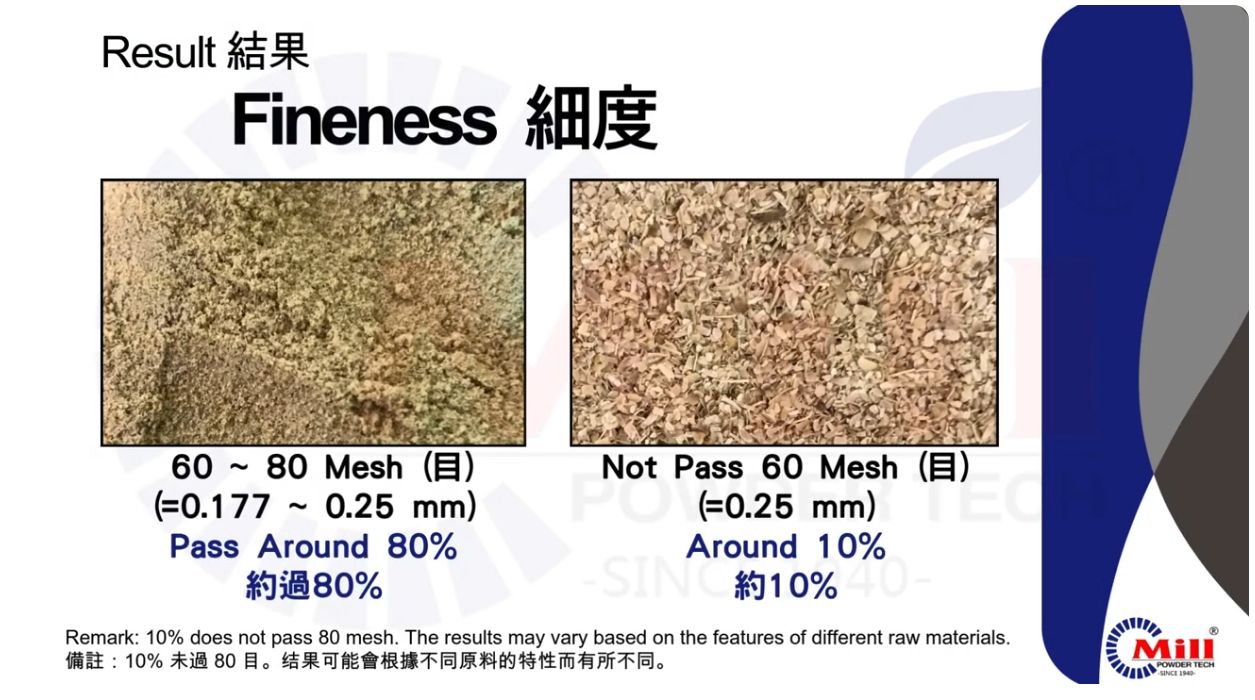
Milling technology transforms agricultural waste into fine powders ready for reuse. By making these materials easier to process, manufacturers create more value in every batch and reduce environmental impact.
The Recyclable Value of Agricultural Waste
Global agricultural production generates large volumes of byproducts. If disposed of directly, these materials create a significant environmental burden. But once materials are milled into controlled, fine powders, they can be converted into energy sources, animal feed, fertilizers, or sustainable materials.
As sustainability becomes a priority across the agricultural sector, farming waste management has become essential to meeting ESG commitments and environmental goals. Advanced milling systems play a central role in making this possible.
Challenges in Agricultural Waste Recycling
Agricultural waste differs widely in hardness and fiber structure. For example, bamboo is dense and highly fibrous, whereas coffee grounds are granular and break apart easily.
Because these materials behave so differently during processing, they also require different particle sizes. Coarser powders are required for animal feed, and ultrafine powders for bio-composites.
To meet all these demands, milling systems must balance efficiency, particle-size uniformity, and production capacity while handling diverse materials. But it’s challenging because every material reacts differently to impact, heat, and airflow.
That’s why manufacturers need an efficient milling setup designed for stable performance across a wide range of material types.
The Importance of Efficient Grinding and Classification
High-efficiency grinding breaks down materials to the required particle size without excessive energy use or equipment wear.
Accurate classification is just as important. By ensuring only particles within the target size range move forward, manufacturers can improve yield and prevent overgrinding.
Together, these processes ensure consistent output quality while maintaining stable production rates, even when grinding a wide variety of agricultural wastes.
The Role of Milling Technology in Circular Recycling
Milling technology turns agricultural waste into reusable resources by:
1. Raw Material Conditioning- The first step in agricultural waste recycling is conditioning the raw material to improve process stability and grinding efficiency. Standard pre-processing methods include:
- Hot air drying to reduce clumping and adhesion
- Cryogenic cooling with liquid nitrogen to enhance brittleness
- Degreasing processes for high-oil-content materials 2. Pre-processing (Size Reduction)
- Coarse powder: Animal feed / Fuel
- Fine powder: Organic fertilizer / Building materials
- Ultrafine powder: Functional additives / Biomaterials
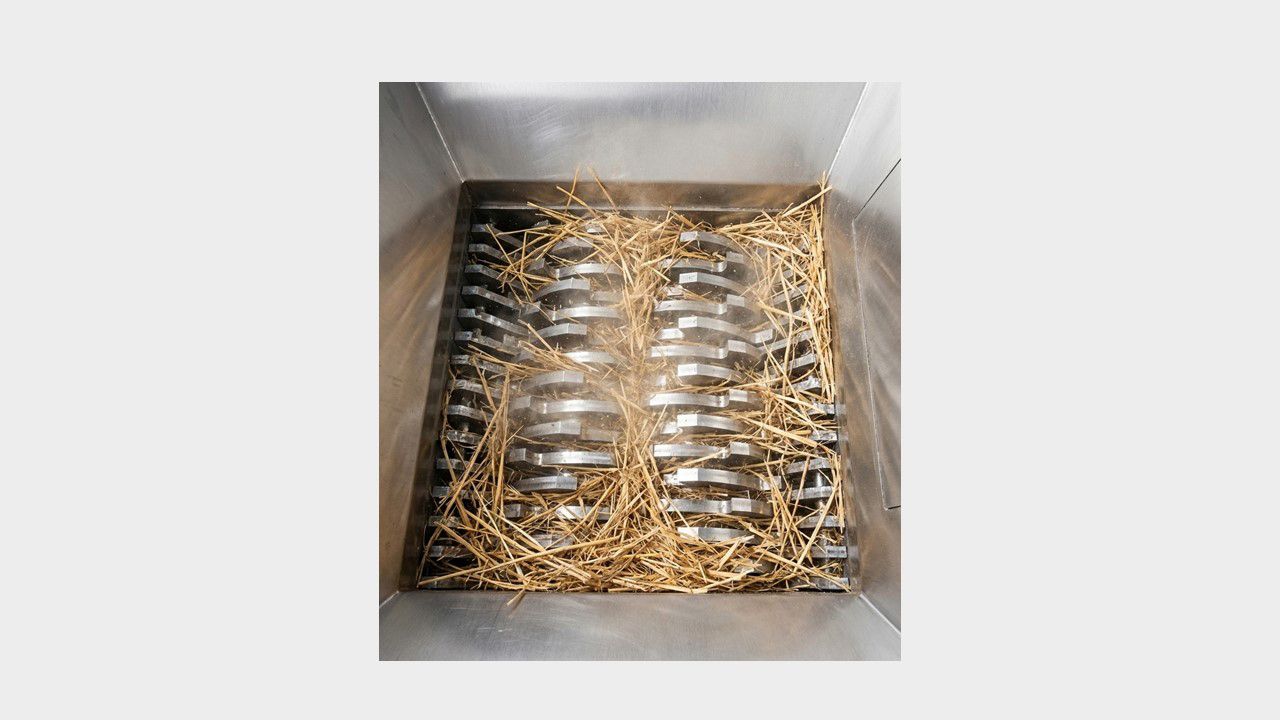
Before fine grinding can take place, large agricultural byproducts must be reduced to a manageable size. Materials like rice straw, bamboo offcuts, or sugarcane residues are cut or shredded into smaller particles, often below 5 mm, to ensure stable feeding.
Mill Powder Tech’s CCM Cutting Machine is designed specifically for this task. It delivers reliable cutting performance on tough, fibrous materials.
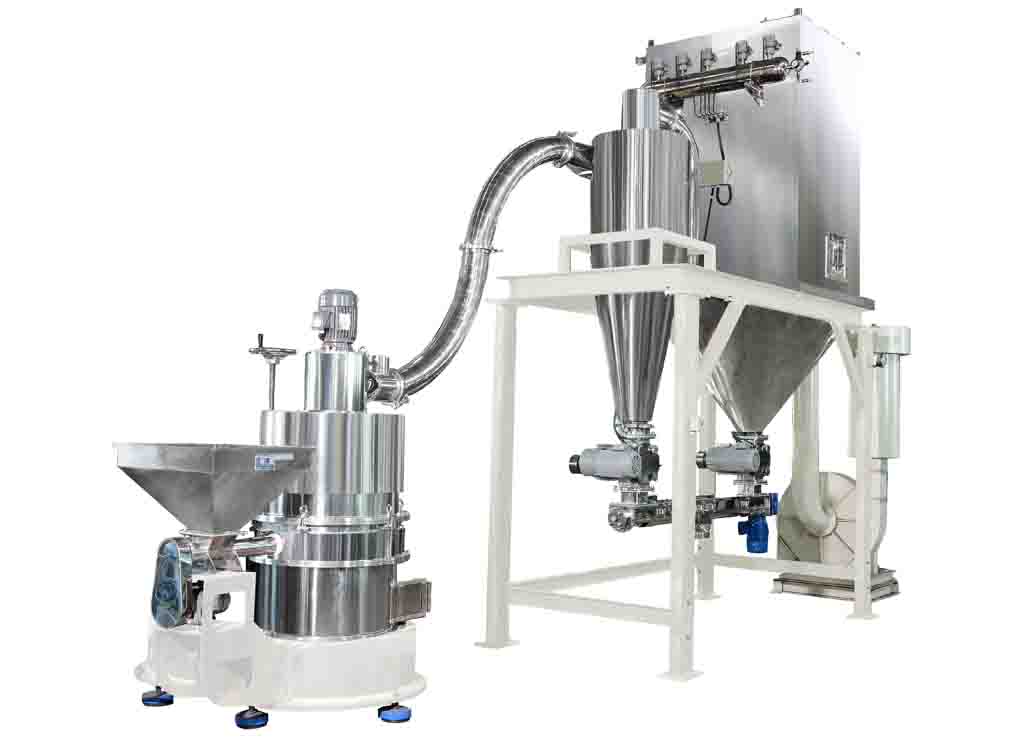
3. Fine GrindingNext, particles are processed in milling systems to produce fine or ultrafine powders for downstream applications.
For this stage, Mill Powder Tech’s Turbo Mill (TM Series) offers high-speed grinding performance with stable operation. Manufacturers can achieve consistent powder quality across varying material properties.
4. Classification and SievingAfter fine grinding, classification ensures particles meet the size requirements of each application. Only powders within the target size range move to the next step, while oversized particles are separated and removed from the process.
To achieve this level of precision, manufacturers often rely on equipment like Mill Powder Tech’s Vibrating Screening Machine to maintain product uniformity and quality.
5. Extended Applications by Particle Size- How recycled agricultural waste can be reused depends on their particle size. By controlling fineness during milling and classification, the same raw material can have multiple uses:
Ultrafine Grinding Option
For applications that require even finer particles, an air classifier mill can be used to achieve ultrafine particle sizes with controlled distribution.
Mill Powder Tech’s ACM Air Classifier Mill does just that. It’s an upgraded evolution of the ICM system, offering an optimized internal design while following the same operating principles and application scope.
Lastly, finished powders are blended with formulation materials using mixing systems, such as Mill Powder Tech’s RM / RC series, to form new recycled raw materials.
Applications of Recycled Agricultural Waste
Once properly milled and processed, agricultural waste can be reused across a wide range of industries.
Fibrous Materials
Rice straw and bamboo residues are well-suited for pulp production and composite materials due to their strong, fibrous cellulose structures. When milled to controlled particle sizes, these fibers can be used in paper manufacturing, fiberboard, and bio-composite panels.
Organic Byproducts
Organic byproducts like coffee grounds and tea stems are commonly reused as organic fertilizers, animal feed ingredients, or functional additives. Milling increases their surface area and dispersion, allowing nutrients and active compounds to be released more effectively.
High-Toughness Fibers
Materials with high-toughness fibers, such as pineapple leaves and sugarcane bagasse, are ideal for bioenergy applications. Through milling, they are processed into uniform particles for biomass fuel or other energy sources.
FAQs
Q1: What are the most common applications of milled agricultural waste?
Milled agricultural waste is widely used in animal feed production, bioenergy, organic fertilizers, and new materials like bio-composites.
By adjusting particle size and applying the right post-processing methods, the same raw material can gain added value and be adapted for different uses.
Q2: Do different types of agricultural waste require different milling equipment?
Yes. Different materials have varying fiber structures and moisture content, and require different milling solutions.
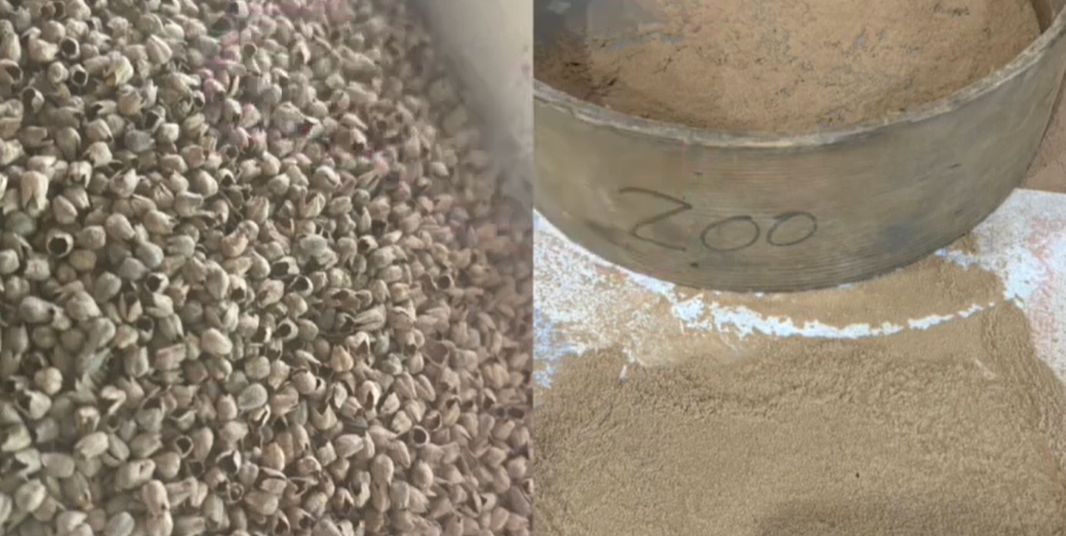
Fibrous rice husks, for instance, are typically processed with turbo mills, while high-moisture fruit residues must be dried before milling to maintain stable capacity and performance. Rice straw used for bioenergy is normally pre-cut before being pelletized into solid recovered fuel (SRF).
Q3: Is milling agricultural waste economically viable?
While milling equipment requires an upfront investment, recycling agricultural waste delivers many long-term benefits. It not only reduces waste disposal costs but also creates new products and additional revenue streams.
Milling and recycling also help companies meet environmental regulations and sustainability.
A Complete Milling Solution for Agricultural Waste Recycling
Recycling agricultural waste is a complex process that involves material variability, particle size control, and demanding processing conditions. Successful recycling depends on systems that can adapt without compromising output quality.
Efficient milling systems, such as solutions from MPT, address these challenges head-on. MPT is a leading manufacturer of milling machines for processing agricultural waste. With a comprehensive lineup of grinding, classification, and mixing equipment, MPT offers milling solutions that support efficient farming waste management and long-term circular economy goals.
Contact us today to build a more sustainable agricultural recycling process.